A Novel by Maureen McElheron
Miss Gitty 1860
Romance and adventure in Old New York—where one young woman dares to follow her heart. A forbidden love draws Miss Gitty beyond the rules of society and into a world of risk, secrecy and independence.
Step into Miss Gitty’s world today.

Inspired by a Real Discovery
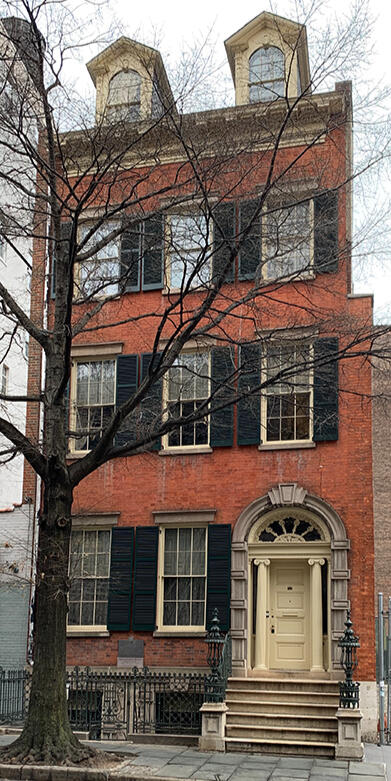
When an 1860 playbill was found tucked inside a taffeta gown at New York’s Merchant’s House Museum, the idea for this novel was born, bringing one young woman’s hidden world to life.In 1860 New York, society had strict rules—and Miss Gitty was expected to follow them. From carefully watched ballroom appearances to the expectations of her powerful family, her future seemed already decided.Tredwell family legend has it that Gitty’s father, prosperous merchant Seabury Tredwell, disapproved of the Irish doctor she fell in love with. As she moves between high society and the hidden corners of the city, Gitty begins to question the life laid out before her—and what she’s willing to risk to follow her heart.Inspired by the Tredwell family, Miss Gitty 1860, brings a vanished New York City to life.

Gertrude "Miss Gitty" Tredwell
1840-1933
What other's are saying:
"Inspired by the wealth merchant family that lived in the 1832 landmark Merchant's House for almost 100 years, this deeply researched work of historical fiction brings to life the world of 1860 New York City. Gertrude "Gitty" Tredwell's imagined captivating adventures in pursuit of love, take her from encounters with composer Stephen Foster, street urchins and a then unknown Abe Lincoln. It's a page turner!"- Pi Gardiner, Executive Director, Merchant's House Museum

Meet the Author
Maureen McElheron has written music for Bill Plympton’s animated films including The Simpsons, Cartoon Network and the Academy Award nominated “Your Face.”Originally from East Lansing, Michigan she moved to New York City. She holds a Master’s degree in education from CCNY and taught in the New York City public schools.While volunteering as a docent at the Merchant House Museum, this novel took shape… inspired by the Tredwell family and life in 1860 New York.
Perfect for Readers Who Love:
New York history
Historical romance
Young adult coming of age stories
Media & Interview Inquiries
Maureen McElheron is available for interviews related to New York city history. [email protected]Visit the Merchant House Museum at:
29 East 4th Street
New York, NY 10003Note: The Merchant’s House, built in 1832 by abolitionist Joseph Brewster and sold to Seabury Tredwell in 1835, has a hidden passageway—used by Brewster as a safe space on the underground railroad. There is no indication that the Tredwell’s participated in the secret operation.